Wednesday, May 6, 2015

二つ腕時計をする男の人:本田圭佑

本田圭佑は私の大好きなサッカー選手です。五年前に、本田圭佑は2010FIFAワールドカップに行きました。良いプレーをしましたから、有名になりました。かれはいつも二つ腕時計をしています。今はACミランの10番です。かっこいいですね。


Thursday, March 26, 2015

Chris Hart

クリス・ハートさんはとてもいい日本の歌手で、アフリカ系アメリカ人です。かれはうたをうたうのがとても上手で、日本語が分かります。三年前にハートさんは『のど自慢 ザ ワールド』(Song For Japan)に入って、勝った。そして、プロデューサーがハートさんを知っていた。アルブムを作りました、コンサートもありました。かれはたぶん日本の一番成功した外国の歌手ですから、すごいですね。

これはハートさんのカバー「糸」です。中島みゆきが書いた。

Tuesday, March 24, 2015

PE6 Reflection

I feel satisfied about my progress in doing what I planned in my goal statement. Here are the specific evaluations:

1) Learn how to use in speech any new vocabulary appearing in my Blog entries
I have not yet written a text-based Blog post since PE1, so the first item doesn't apply yet. However, I have been learning new Japanese vocabulary and their usage from dramas, cartoons and films. Surely, I will have written Blog assignments before the end of the semester, and I will do as item 1 dictates for each Blog post I write.

2) Learn at least 3 Japanese songs
So far this semester, I have learned 「碧い瞳のエリス」by 安全地帯 (PE3) as well as 「最愛」by 柏原芳恵 (PE5)。I will definitely have learned three songs by the end of the semester, probably more. To be honest, I'm not sure how much I'm actually improving my speech by singing, but I enjoy doing it and I feel like I'm learning new vocabulary as well as new ways to use known vocabulary in the process.

3) Shadow 15 minutes a week outside of PE
This was easier to do near the beginning of the semester. I generally shadow a show I'm watching for 15 minutes on a Saturday or Sunday. During the midterm period, I didn't accomplish my weekly quota, but I have continued my shadowing routine since.

For the rest of the semester, I will keep following items 1 through 3. I will so also go to either language table or office hour at least once a week.

Thursday, February 5, 2015

PE1

I don't know if I will continue with Japanese after this semester. It was my unequivocally favorite class last semester and probably will be again this semester, but for practical reasons I don't see myself going to an elective five days a week for the rest of my time at Princeton.

Due to this uncertainty, I want to spend the current semester in Japanese class in a way that will leave me no regrets should it be my last. A frustration I've had intermittently since September was not being able to express my feelings properly both in speech and in writing. I want to convey my true thoughts, not simplified or abridged versions due to linguistic incompetence. Although that will not happen within five months, it will be my ideal to work toward this semester.

To achieve my goal, I will do the following:
1) Learn how to use in speech any new vocabulary appearing in my Blog entries
2) Learn at least 3 Japanese songs
3) Shadow 15 minutes a week outside of PE

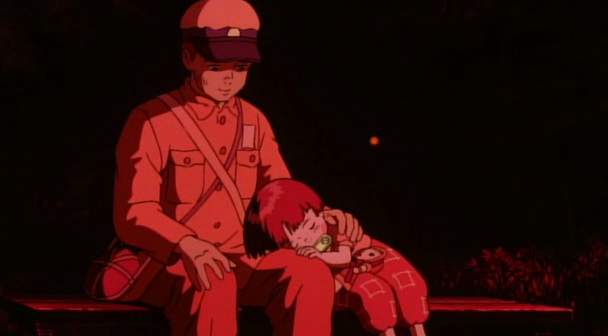
「火垂るの墓」

冬休みにルームメイトと「火垂るの墓」をみて、泣きました。私は泣きした前回を覚えていない。

私がみましたアニメ映画の中です、「火垂るの墓」は一番痛烈で悲しいです。
飢えた節子のえは私の心の中にあるので、私は長い間、和食を食べません。私は有罪です。
アメリカも有罪です。
戦争は罪。
Watch 10:39 to 13:25 and you'll understand why I won't be able to let myself eat Japanese food until I forget Setsuko. 


Monday, December 1, 2014

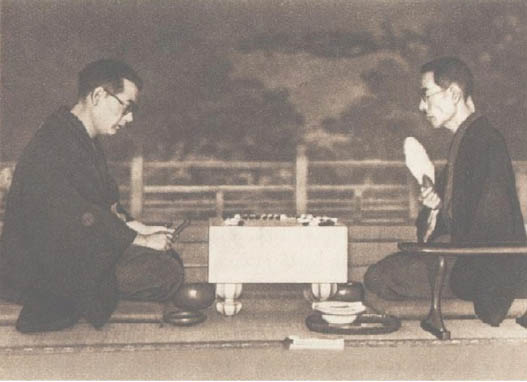
「昭和の棋聖」の死

きのう、私の好きな棋士(きし)呉清源(ご せいげん、1914年6月12日 - 2014年11月30日)はしにました。それはしゃしんです。

呉清源は20世紀(せいき)のさいこうの棋士でしたから、かれはとてもゆうめいでした。呉清源はとてもいさましくて、かくしんてきかったです。かれは一番ゆうめいなスタートをつくりました:
(星、三三、天元)
(ほし、さんさん、てんげん)

呉清源は中国(ちゅうごく)人でした。でも、日本人となりましたから、たくさん中国人は呉清源がきらいました。ナショナリズムはおろかなです。とてもざんえんですね。呉清源が安らかに眠る。

Friday, November 14, 2014

Paganini Caprice No.24 by 石川綾子

As you would often hear from people who share these kinds of videos, "I wish I kept playing the violin." The more jaded among you are probably already shaking your head. 

What else can I wish for? That Princeton didn't exist? That money didn't exist? That women didn't exist? That I know what I want? I would pay my life for the lattermost. The lattermost is the difference between Ishikawa and me.

Enjoy.


Monday, November 3, 2014

雪国(ゆきぐに)

川端康成(かわばたやすなり)がとてもすきです。かれは雪国(ゆきぐに)をかいた、雪国はいいほんです。そして、ふるいほんです。わたしはにほんごをよみませんでした。でも、ちゅうごくごのほんやくとえいごのほんやくをよみました。雪国はとてもうつくしいです。雪国もとめもつうれつです。ほんとにすきです。

雪国
川端康成
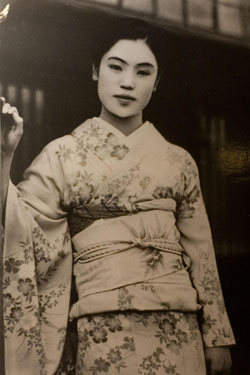
松栄(駒子のモデル)
Matsuei (onsen geisha on which the character Komako was based)

I once wrote about Snow Country for Columbia adcoms. For the English readers: 

“Beauty is that which induces pleasure.” As soon as Mr. Pirie introduced Kierkegaard’s position on beauty in that cozy afternoon class, I knew Kierkegaard would’ve been my perfect reading buddy. I seek nothing but beauty when reading for pleasure, and Snow Country by Yasunari Kawabata is the most meaningful novel I’ve read because it’s the most beautiful.

Kawabata tells a simple tale free of contrivances. Painting the image of a hot spring town in wintertime with delicate brushstrokes, he immerses me in the surreal beauty of snow country. His economy of language and accretion of details infuses the detached narrative with an intangible force, dragging me into a torrent of poignancy. As protagonist Shimamura vacillates between rational judgment and emotional impulse in his fragile affair with Komako, an onsen geisha who despite her identity emanates the purity of snow under Kawabata’s pen, I can’t help but feel Shimumura’s delicious torment.

Kawabata brands “wasted effort” on the hopeless infatuation between Shimamura and Komako time and again, but as much as I am saddened by their inevitable parting, I am roused by their fervent pursuit of beauty. The relationship. Shimamura’s unpublished essays on occidental ballet. Komako’s learning samisen from the radio. So what if nothing is accomplished? The beauty experienced in the process, albeit ephemeral, is real.

Generations of mathematicians spent their lives parsing the mystery of the Riemann Hypothesis and failed. The novel’s translator Edward Seidensticker, who taught alongside Donald Keene until retiring in 1985, admitted flawless translation is impossible. Yet in their lifelong pursuit of beauty, these people found fulfilment that transcended the ends they never achieved.

Through a novel beautiful in itself, Kawabata inspires me to pursue beauty in life without dwelling on the possibility of failure. There’s not enough time for hesitation.


Sunday, November 2, 2014

Reflection & New Goal Statement

Reflection:
I have achieved my goal to improve my Japanese word pitch and phrasal intonation. Among my planned activities, I have watched the videos on cengage and repeated after the dialogue. However, I only had enough time to shadow for one 10-minute period each week.

Goals:
To continue improving my Japanese word pitch and phrasal intonation
To maintain first goal at higher speeds

Activities:
Watch videos on cengage
Shadow for 10-minutes every week
Sing a Japanese song when I encounter one I like
Go to Japanese language table twice a month

Sunday, October 19, 2014

雪の華

にほんのミュージックわとてもすきです。そして、にほんのうたをうたった。The song is 雪の華 (Yuki no Hana) by 中島美嘉 (Nakashima Mika)。


I recorded a part of this song for PE 5, then decided to record the whole song since I liked it so much. Lyrics are as follows:

雪の華

のびた人陰(かげ)を舗道にならべ
夕闇のなかを君と歩いてる
手をつないでいつまでもずっと
そばにいれたなら
泣けちゃうくらい

風が冷たくなって
冬の匂いがした
そろそろこの街に
君と近付ける季節がくる

今年、最初の雪の華を
ふたり寄り添って
眺めているこの瞬間(とき)に
幸せがあふれだす

甘えとか弱さじゃない
ただ、君を愛してる
心からそう思った

君がいるとどんなことでも
乗りきれるような気持ちになってる
こんな日々がいつまでもきっと
続いてくことを祈っているよ

風が窓を揺らした
夜は揺り起こして
どんな悲しいことも
僕が笑顔へと変えてあげる

舞い落ちてきた雪の華が
窓の外ずっと
降りやむことを知らずに
僕らの街を染める
誰かのために何かを
したいと思えるのが
愛ということを知った

もし、君を失ったとしたなら
星になって君を照らすだろう
笑顔も涙に濡れてる夜も
いつもいつでもそばにいるよ

今年、最初の雪の華を
ふたり寄り添って
眺めているこの瞬間(とき)に
幸せがあふれだす

甘えとか弱さじゃない
ただ、君とずっと
このまま一緒にいたい
素直にそう思える

この街に降り積もってく
真っ白な雪の華
ふたりの胸にそっと想い出を描くよ
これからも君とずっと

Various English translations are available online; I hope you like my cover of the song. 

Monday, September 29, 2014

Goal Statement 1

Goals:

  • To improve my Japanese word pitch and phrasal intonation 
Activities:
  • Watch unassigned chapter videos on Cengage and repeat after the dialogue 
  • Shadow Japanese drama twice a week, ten minutes each time 

Self-Intro Video


Monday, September 22, 2014

Self-Intro

はじめまして、わたしわZhangです。ぷりんすとんだいがくのいちねんせいです。ぷりんすとんだいがくのりうがくせいです。わたしのせんこうわけいざいがくです。かなだからきました。どうぞよろしく。

Thursday, September 11, 2014

Hello Everybody

I chose to study Japanese because I am very fond of Japanese literature, music, television, cinema, cartoon, aesthetics, soccer, food and people. I am excited about being able to understand the Japanese shows I watch better and being able to communicate with Japanese people. 『ペテロの葬列』は、非常に良好なテレビ番組である!